The Cheapest Suburbs to Buy a House in Australia 2026
Where can you still buy a house in Australia for under $500K in 2026? More places than you'd think. A state-by-state look at the genuine value plays, plus what to actually check before you buy.

By Bec Ramirez
6 May 2026 9 min read
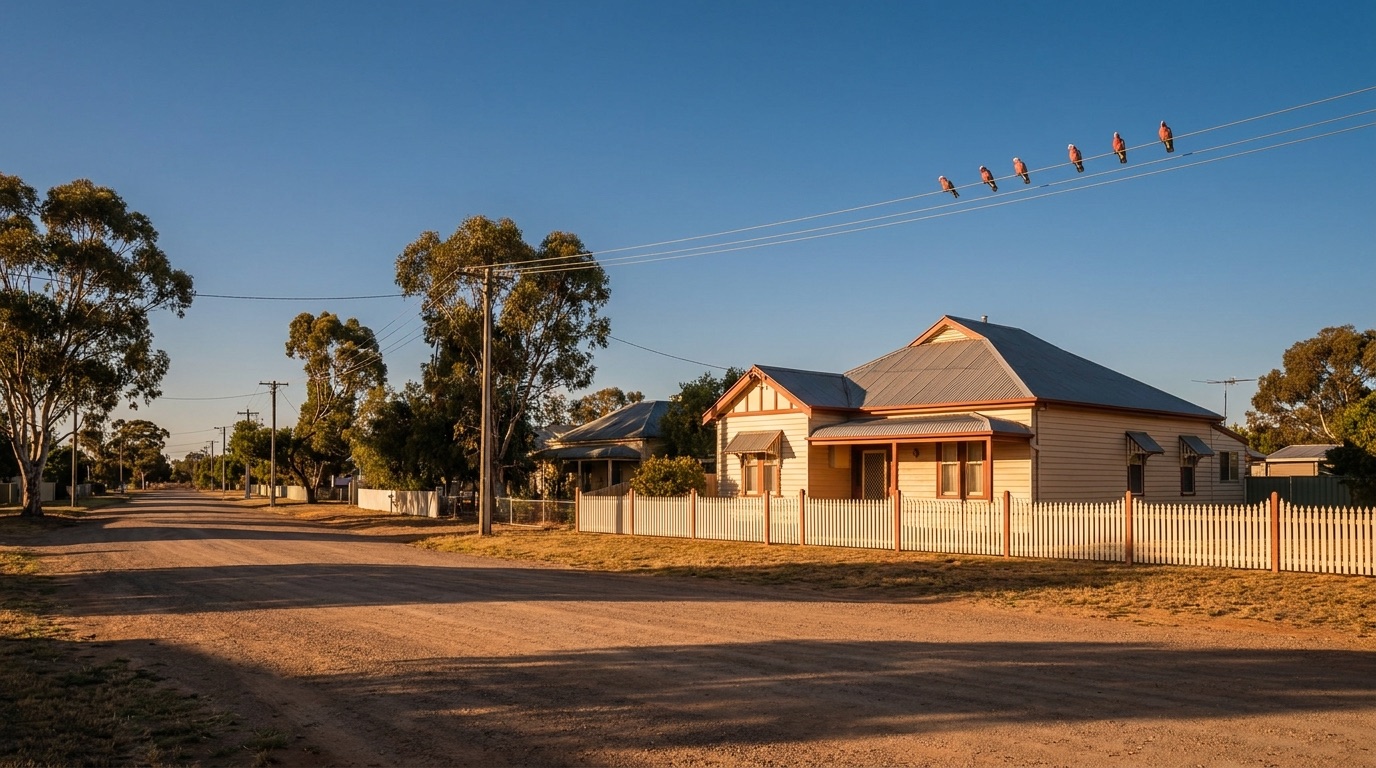
Australian housing affordability dominates the news in 2026, but the headline median prices hide significant variation. Across every state, there are still suburbs where the median house price sits under $500,000, many under $400,000. The question for buyers is which of those represent genuine value (where prices reflect a viable lifestyle) versus which are cheap for reasons that won't change.
This guide covers the cheapest suburbs to buy a house in Australia in 2026, organised by state, with an honest take on what each location offers and what to check before committing.
New South Wales
NSW remains Australia's most expensive state, but regional and far-western suburbs still offer genuine sub-$500K options. Broken Hill sits around $260K, supported by mining-sector employment and historic charm. Tamworth at around $480K offers a regional centre lifestyle with good services. Lithgow at $420K and Bathurst-adjacent suburbs at $450 to $500K provide commuter-distance value to the Central Coast and Blue Mountains. Within Greater Sydney's outer rings, suburbs like Mount Druitt are pushing past the $700K mark, so Sydney metro under $500K is largely unavailable in 2026.
Victoria
Regional Victoria offers some of Australia's best regional value. Mildura at around $390K, Swan Hill at $370K, and Horsham at $360K all offer sub-$400K medians with viable economies and lifestyle. Wodonga on the NSW border sits at $470K and benefits from the cross-border commute to Albury. Within Greater Melbourne, sub-$500K is largely apartments only at this point, with most house options well above that threshold.
Queensland
Queensland still offers the best capital-city-adjacent value of any major state. Logan Central, Beenleigh and Slacks Creek in outer Brisbane, while above $500K now, were sub-$500K as recently as 2023. Look further out and Toowoomba at $560K (or surrounding satellite towns under $500K), Rockhampton at $410K, Townsville's outer suburbs from $380K, and Mackay's affordable pockets at $430K all provide genuine value with supporting industries (agriculture, defence, mining, tourism).
Western Australia
Perth's growth has pulled most metro suburbs above $500K, but regional WA offers some of Australia's most accessible house pricing. Geraldton at around $410K, Kalgoorlie at $390K, Bunbury at $470K, and Albany at $560K all combine affordability with strong rental yields driven by mining, resources, and tourism. Outer Perth corridor suburbs (Mandurah's outer pockets, Armadale) are the closest metro options under $500K.
South Australia
SA continues to deliver Australia's best blend of affordability and metro access. Salisbury, Elizabeth, Davoren Park in Adelaide's north all sit under $550K with house medians under $500K still findable in specific pockets. Mount Gambier at $390K and Whyalla at $250K offer regional options with established economies. Adelaide remains the best capital city to find sub-$500K houses in genuinely connected suburbs.
Tasmania
Tasmania's affordability moved sharply through 2018 to 2022, but the north-west coast still offers genuine value. Burnie at $400K, Devonport at $440K, and smaller centres like Wynyard at $390K all offer under-$500K houses with bay or coastal proximity. Launceston's outer suburbs can be found around $470K. Hobart metro is mostly above $600K.
Northern Territory
NT offers some of Australia's most affordable urban housing, particularly outside Darwin. Alice Springs at $400K and Katherine at $380K offer regional centre lifestyles. Within Darwin, Palmerston satellite suburbs can still be found around $480K to $550K, with apartments well below.
What to actually check before buying cheap
- Population and economic trends. A suburb cheap because the local industry is shrinking is a different proposition to a suburb cheap because of geography or planning
- Rental demand and vacancy. If you're buying as an investor, low vacancy and rising rents signal genuine demand
- Infrastructure pipeline. Hospitals, schools, roads and rail upgrades drive medium-term value
- Climate and hazard exposure. Flood, bushfire, cyclone and erosion risk are real and increasingly material to insurance and property values
- Local employment base. Single-industry towns are riskier than diverse regional centres
- Buyer agent or local expert. Cheap doesn't mean low-effort. The cheaper end of the market often requires more local knowledge to navigate
Cheap suburbs in 2026 are still findable across every state. The question isn't whether you can buy a house under $500,000 in Australia, you can, but whether the right one for your situation exists at that price. Use suburb data, check the fundamentals, and make sure the price reflects opportunity rather than risk.
Take the full guide with you.
The complete guide to selling property in Australia: what it really costs, how agents price your home, the 10 questions that catch bad agents out, and a 12-week plan to settlement. Free PDF, personalised to your suburb, in your inbox in 60 seconds.
Read next