Australia's Fastest-Growing Suburbs in 2026
Where in Australia are property prices growing fastest in 2026? A look at the standout-performing suburbs in each state, what's driving them, and whether the growth is durable.

6 May 2026 10 min read
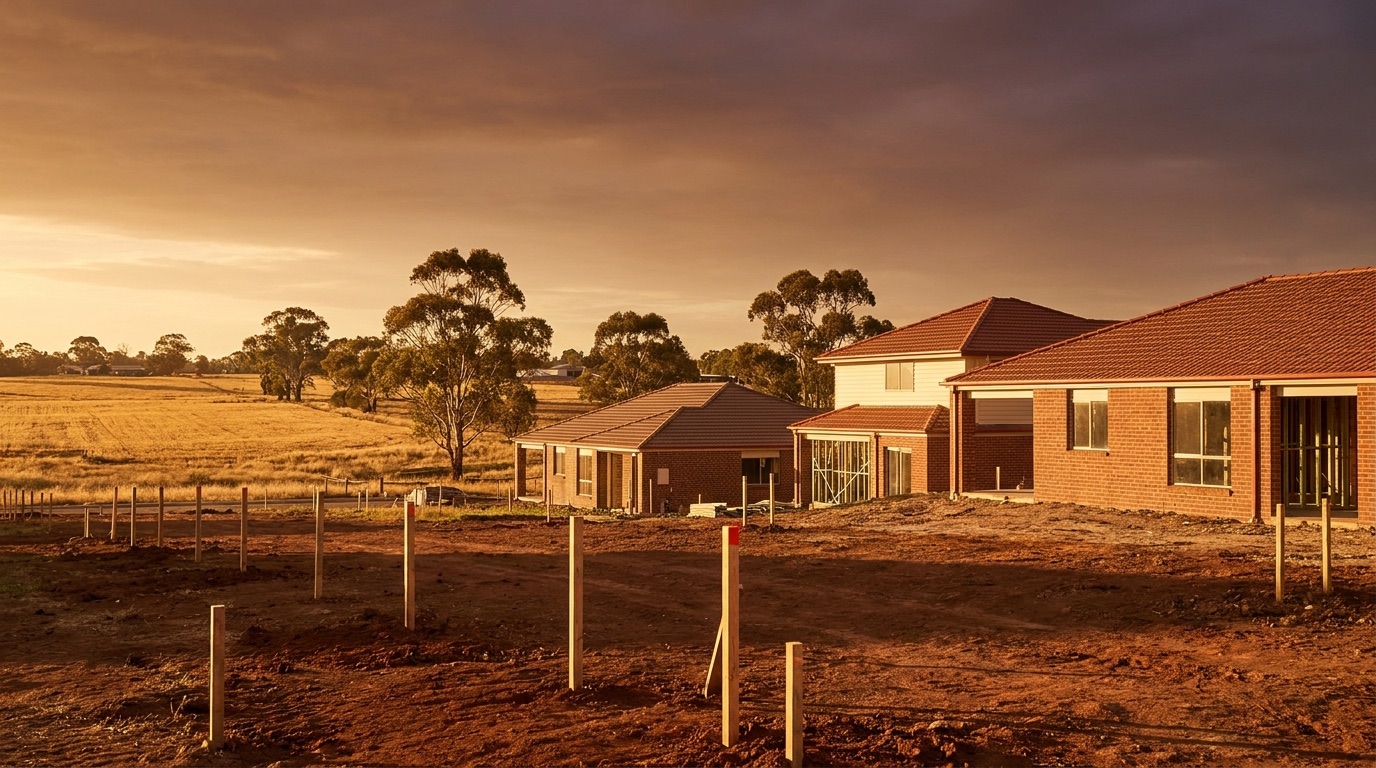
Year-over-year price growth varies enormously across Australian suburbs. Some areas are growing at 12 to 15% annually while neighbouring suburbs are flat or down. Understanding what's driving the growth, infrastructure, population, investment, or speculation, is the difference between catching a structural trend and buying late into a heated market. This guide covers Australia's fastest-growing suburbs in 2026 by state, with an honest read on whether each story is durable.
NSW: Western Sydney corridor
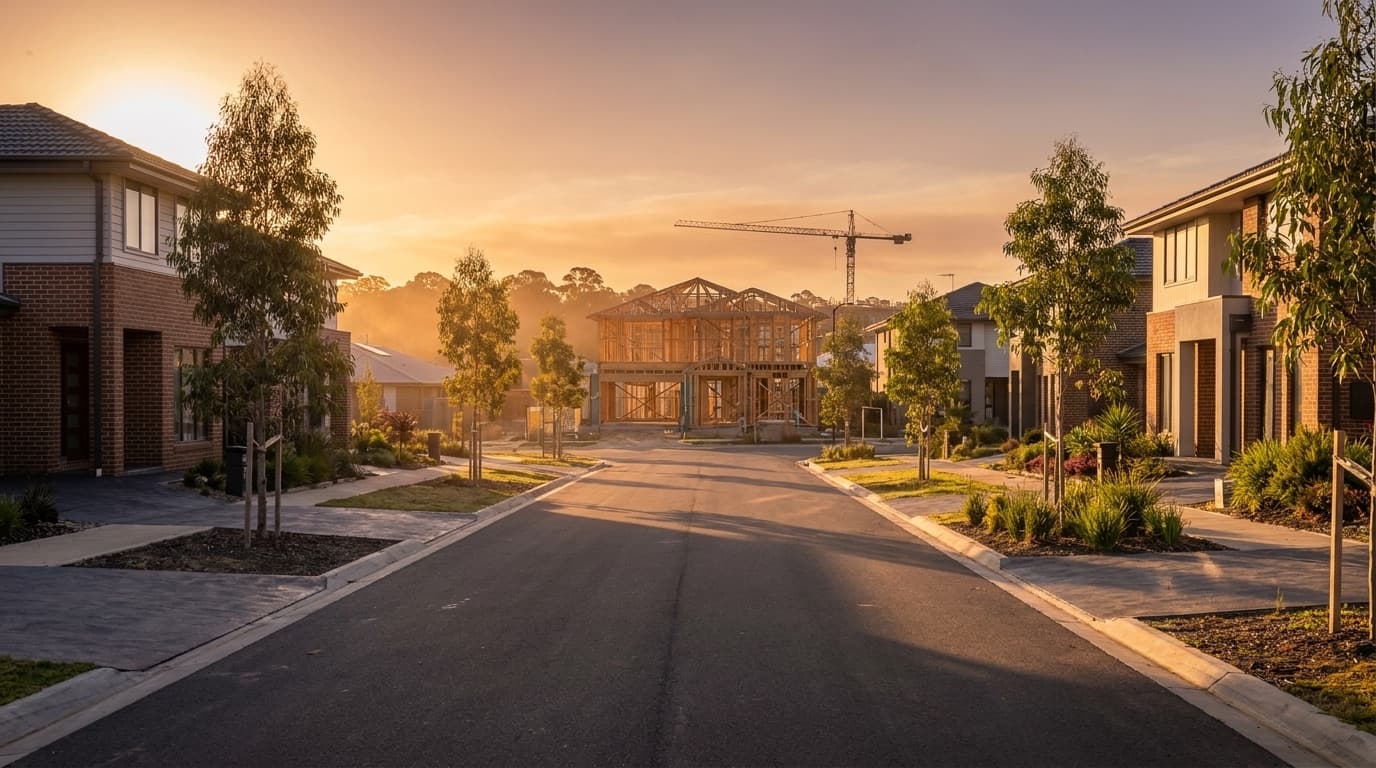
The standout NSW growth story is Sydney's outer-southwest corridor. Oran Park, Leppington, Austral and Edmondson Park are seeing 9 to 12% annual growth, supported by the Western Sydney Airport (operational from late 2026), the M12 motorway, and the South West Rail Link. These are infrastructure-driven moves that should be durable through 2027–28. Marsden Park and Schofields in the northwest are also delivering 8 to 10% growth on similar drivers.
VIC: Geelong fringe and Ballarat
Victoria's fastest-growing suburbs are now in Geelong's outer ring (Armstrong Creek, Charlemont, Lara) and Ballarat's growth corridor (Lucas, Alfredton, Smythes Creek), all at 7 to 10% annually. The story is regional infrastructure (Geelong Ring Road, Ballarat West Health Service expansion) and accelerated remote-work-driven population inflow. Inner Melbourne suburbs aren't on the fastest-growth list, but middle-ring is firming again.
QLD: Brisbane Olympics corridor and Sunshine Coast
Brisbane's Olympics-adjacent suburbs lead Queensland's growth charts. Albion, Woolloongabba, Kangaroo Point and Kelvin Grove are seeing 8 to 11% annual growth as venue construction and Athletes Village development progress. The Sunshine Coast's Birtinya, Maroochydore CBD, Caloundra West are at 9 to 12%, supported by population inflow and infrastructure including the Sunshine Coast University Hospital expansion. Outer Brisbane's Caboolture, Logan and Ipswich corridors remain on solid 7 to 9% growth tracks.
WA: Mandurah and Bunbury
Western Australia's fastest-growing markets in 2026 are no longer the inner-Perth premium suburbs (which had their run) but regional centres absorbing Perth overflow. Mandurah's outer suburbs at 9 to 12% annual growth, with Bunbury and surrounds at 7 to 10%. Northern Perth corridor (Yanchep, Two Rocks, Alkimos) is also delivering 7 to 9% as the metro extends north.
SA: Adelaide outer and Mount Barker
South Australia's fastest-growing suburbs are in Adelaide's outer-northern (Munno Para, Andrews Farm, Riverlea Park) and outer-southern (Aldinga Beach, Sellicks Beach, Hackham West) growth corridors, all at 8 to 11% annual growth. Mount Barker in the Adelaide Hills continues to absorb metro overflow at 7 to 9% growth. The drivers are affordability migration from Adelaide metro core, plus continued interstate inflow.
TAS: Launceston and the north
Tasmania's growth has shifted from Hobart to the north. Launceston's Newstead, Trevallyn and Norwood are seeing 8 to 11% annual growth. Devonport and Burnie on the north-west coast are at 6 to 9%. The story is interstate retiree and remote-worker migration plus University of Tasmania campus expansion in Launceston.
ACT: Outer corridors
Canberra's growth-leader suburbs in 2026 are the outer corridors: Whitlam, Strathnairn (Molonglo Valley) at 6 to 8%, Gungahlin's outer pockets at 5 to 7%. Inner south and inner north Canberra remain tightly held but at slower growth rates than the outer corridors.
NT: Palmerston satellite suburbs
NT's strongest growth is in Palmerston's satellite suburbs (Bellamack, Johnston, Zuccoli) at 6 to 9% annual growth. After several years of softness, these areas have firmed on the back of population inflow, defence employment, and rental tightness pushing yields up.
What makes the growth durable vs. speculative
Not all fast-growing suburbs are created equal. The durable growth stories share several characteristics:
- Infrastructure pipeline. Roads, rail, hospitals, schools, visible spending that improves utility
- Population inflow. Sustained demographic shift, not a one-off COVID spike
- Employment growth. New jobs, not just new residents
- Affordability gradient. Cheaper than nearby established suburbs creates absorption demand
- Rental tightness. Vacancy under 2% indicates real housing demand, not speculative inflows
By contrast, speculative growth stories often involve:
- Rapid investor entry without supporting employment growth
- Off-the-plan apartment supply pipelines that haven't yet hit the market
- Single-industry towns with concentrated employment risk
- Climate or hazard exposure that's not yet priced into market expectations
How to use this in 2026
Fast-growing suburb lists are a starting point, not a strategy. Before buying into any of these markets:
- Verify the growth story with hard data (median price 12-month change, days on market, vacancy rate)
- Check the infrastructure pipeline. Is it actually under construction, or just announced?
- Look at the supply pipeline. New stock often moderates future growth
- Match the suburb to your goals. Owner-occupier? Yield investor? Capital growth? Each has different ideal targets
- Consider buying earlier in the next cycle rather than late in the current one
The fastest-growing suburbs in 2026 reflect Australia's structural shifts: infrastructure-driven outer-metro growth, regional centre maturation, and lifestyle-led migration. Most of these stories should run another 2 to 4 years. But "fastest-growing now" doesn't always mean "best to buy today", late entrants often pay for someone else's earlier insight.
Take the full guide with you.
The complete guide to selling property in Australia: what it really costs, how agents price your home, the 10 questions that catch bad agents out, and a 12-week plan to settlement. Free PDF, personalised to your suburb, in your inbox in 60 seconds.
Read next