Federal Budget 2026: What It Means for Australian Property
Treasurer Jim Chalmers handed down the 2026-27 federal budget on 12 May 2026, with the biggest changes to property tax in a generation. Negative gearing is being limited to new builds, the 50% CGT discount is being scrapped, and $6.3 billion is going into housing-enabling infrastructure. Here's what every owner, investor, renter and first home buyer needs to know.

By Bec Ramirez
13 May 2026 14 min read

The 2026-27 federal budget, handed down by Treasurer Jim Chalmers on the evening of 12 May 2026, contains the most significant overhaul of Australian property tax in over thirty years. After months of speculation and a broken pre-election promise on negative gearing, the government has moved decisively on the demand side of the housing market while also injecting billions into supply. The combined effect will reshape how Australians buy, invest and rent for at least the next decade.
This is the plain-English guide to what's in the budget for property, when it takes effect, who is grandfathered, and what it actually means for your situation, whether you're a first home buyer, a current owner, an investor, or a tenant.
The headline changes at a glance
- Negative gearing limited to new builds from 1 July 2027, established residential investment properties purchased after 7:30pm AEST on 12 May 2026 will no longer be eligible for negative gearing against salary income
- 50% CGT discount replaced with cost base indexation plus a 30% minimum tax on net capital gains for residential investment property
- New homes exempt from both the negative gearing and CGT changes, a deliberate incentive to direct investor capital into new supply
- Existing investors grandfathered: anyone who owns a residential investment property on 12 May 2026 keeps their current tax treatment for that property
- $6.3 billion total for housing-enabling infrastructure: water, sewer, roads and power to unlock up to 65,000 new homes over the decade
- Housing Australia Future Fund continues progressing toward 40,000 social and affordable homes
- Dwelling price growth forecast revised down to 3% in 2026 (from 5%), with Treasury expecting a modest cooling effect from the tax changes
What's actually changing on negative gearing
Negative gearing, the ability to deduct net rental losses against salary and other income, has been a fixture of Australian property investment since the 1980s. From 1 July 2027, it will only apply to new builds. For established residential investment properties purchased after 7:30pm AEST on Tuesday 12 May 2026, any rental loss will only be deductible against other property income, not against salary.
The grandfathering is critical. If you owned the investment property on budget night, nothing changes for that property. If you buy an established property the day after the budget, you fall under the new rules. The cut-off is precise, to the minute, to prevent a rush of last-minute purchases.
What this means in practice: investors weighing an established three-bedroom rental in an outer suburb will get a different answer in 2026 than they would have in 2025. The same property, with the same rent, will produce a worse after-tax cashflow position for any new buyer. Investors who want to keep the negative gearing benefit can still do so, but only by buying new builds.
What's actually changing on capital gains tax
The 50% CGT discount, which has applied to assets held longer than 12 months since 1999, is being replaced for residential investment property. Two changes work together:
- Cost base indexation returns. Instead of paying tax on half the nominal gain, investors will pay on the real (inflation-adjusted) gain. For long-held properties this is roughly tax-neutral. For shorter holds in low-inflation periods, it's worse.
- A 30% minimum tax on net capital gains from residential investment property. Even if your marginal rate is below 30%, that's the floor for residential property gains.
New homes are exempt, a property that was a new build when first acquired by the investor keeps the old 50% discount treatment. Like negative gearing, existing properties owned on 12 May 2026 are fully grandfathered.
What it means if you're a homeowner (not an investor)
If you own your principal place of residence and don't have an investment property, the budget changes almost nothing for you directly. The main residence CGT exemption is untouched. What may move is the value of your home, indirectly, through changes in investor demand. Treasury's revised forecast, 3% national dwelling price growth in 2026, down from 5%, suggests they expect a mild cooling effect rather than a crash.
Owner-occupier suburbs, particularly family-suited middle-ring areas, are likely to be less affected than investor-heavy markets like inner-city units in Sydney and Melbourne, where any cooling will be more pronounced.
What it means if you're a property investor
The most important rule for current investors: existing properties are protected. Any property you owned on 12 May 2026 keeps negative gearing eligibility against salary income, and keeps the 50% CGT discount on sale. There is no requirement to sell, restructure or do anything immediately.
For investors considering future purchases, the calculation is different:
- An established rental loses both negative gearing against salary and the 50% CGT discount. The after-tax case for that purchase is materially worse
- A new build keeps both benefits, and now competes for investor demand with fewer alternatives
- Yield matters more than capital growth in the new regime. Cashflow-positive properties become disproportionately attractive
- Geographic mix may shift. Markets dominated by new estate land (outer Brisbane, southwest Sydney, north-west Melbourne, Perth corridors) become structurally more attractive for new investors
What it means if you're a first home buyer
First home buyer schemes are unchanged. The First Home Guarantee, First Home Super Saver Scheme, state First Home Owner Grants and stamp duty concessions all remain in place. The 5% deposit scheme continues. Help to Buy, the federal shared equity scheme, also continues.
What changes for first home buyers is the competitive environment. With investor demand for established properties expected to cool, owner-occupiers should face less direct competition at the auction line for the kinds of properties typically targeted by both groups, established 2-3 bedroom houses in middle-ring suburbs and units in established blocks. This is a quiet but meaningful tailwind for first home buyers in 2026.
One area to watch carefully: new build pricing. With investors pushed toward new supply, new-home asking prices could firm at the same time owner-occupier new-build buyers are competing for the same stock. Anyone targeting house and land or off-the-plan in 2026 should expect more competition from investors.
What it means if you're renting
Treasury modelling suggests the rental impact will be small, under $2 per week increase on average for households paying the current median rent. The argument from critics is louder: if investor demand softens, supply of rental stock could tighten further over time, pushing rents up.
The counter-argument from Treasury and supporters: the tax changes are designed to redirect investor capital from existing stock to new builds, which adds to total housing supply over time. Either way, the immediate impact for current tenants on existing leases is zero. The medium-term effect will depend on whether the housing-enabling infrastructure investment delivers the 65,000 additional homes Treasury is forecasting.
The $6.3 billion supply package
Often overlooked beneath the tax changes is a substantial supply-side commitment. The federal government is putting $6.3 billion into housing-enabling infrastructure, the water, sewer, roads, electricity connections and rail/transport links that have to exist before homes can be built on greenfield and brownfield sites. The package is designed to unlock up to 65,000 additional homes over the next decade.
This adds to existing commitments:
- Housing Australia Future Fund: 40,000 new social and affordable homes by 2029, with 279 projects committed to date
- Social Housing Accelerator: continuing rollout of state and territory-managed projects
- National Housing Accord: the original 1.2 million homes by mid-2029 target, which now appears more achievable with the supply funding lift
Migration and demand
The budget acknowledges the housing-demand link with population growth. With Australia's population set to grow by another one million people, the government has signalled tighter migration settings, but stopped short of a dramatic cut. Net overseas migration is forecast to ease but stay above the long-run average. The implication: demand pressure on housing remains a structural feature even with the new supply package.
Winners and losers in property
This budget creates real winners and losers within the property market:
Winners
- Owner-occupiers and first home buyers: less investor competition for established stock
- Existing investors: fully grandfathered and now own scarce assets in a smaller future pool
- New-build investors: concentrate in a segment that keeps both negative gearing and the CGT discount
- Developers of medium-density and new-estate housing: investor demand shifts toward their stock
- States and territories with active land release programs: infrastructure funding goes further
Losers
- New investors targeting established residential properties: worse after-tax economics, especially for negatively-geared positions
- Inner-city established unit markets: heavily reliant on investor demand
- Investors planning to use property capital gains for retirement: the indexation + 30% minimum tax combination is materially less favourable than the 50% discount for many investors
What to do next
If you own investment property, do nothing in haste. Your existing properties are grandfathered. The instinct to sell quickly to lock in the old CGT discount usually creates more cost (transaction costs, retraining a portfolio, transaction-related CGT itself) than it saves. Speak to your accountant before making any structural moves.
If you're considering buying an investment property, the calculation has changed but not necessarily for the worse. New builds remain favourably treated and have additional structural support. The investor case for outer-corridor house and land in Brisbane, southwest Sydney, north-west Melbourne and Perth growth corridors is arguably stronger now than before the budget.
If you're a first home buyer, this is one of the better budgets you'll see in your buying lifetime. Schemes are intact, investor competition is easing, and the supply package will start to deliver additional stock from late 2026 onward. The window to use the existing schemes well is wide open.
The political and economic context
The negative gearing change breaks a clear pre-election commitment, and the government has acknowledged that. Treasurer Chalmers has framed the move as a structural reform that prioritises young Australians being able to buy, even at political cost. Whatever your view on the politics, the policy is now law from budget night, and the cut-off times are locked. The economic effects will play out over years, not weeks.
For Your Property Guide's view: this is a sober, structurally significant set of changes that will reward investors who think long-term and buyers who understand the new incentive landscape. We'll be updating our suburb data, calculators (negative gearing, CGT, rental yield) and state buying guides over the coming weeks to reflect the new rules. The fundamentals of property, location, supply, demand, and rental yield, haven't changed. The tax wrapper around them has.
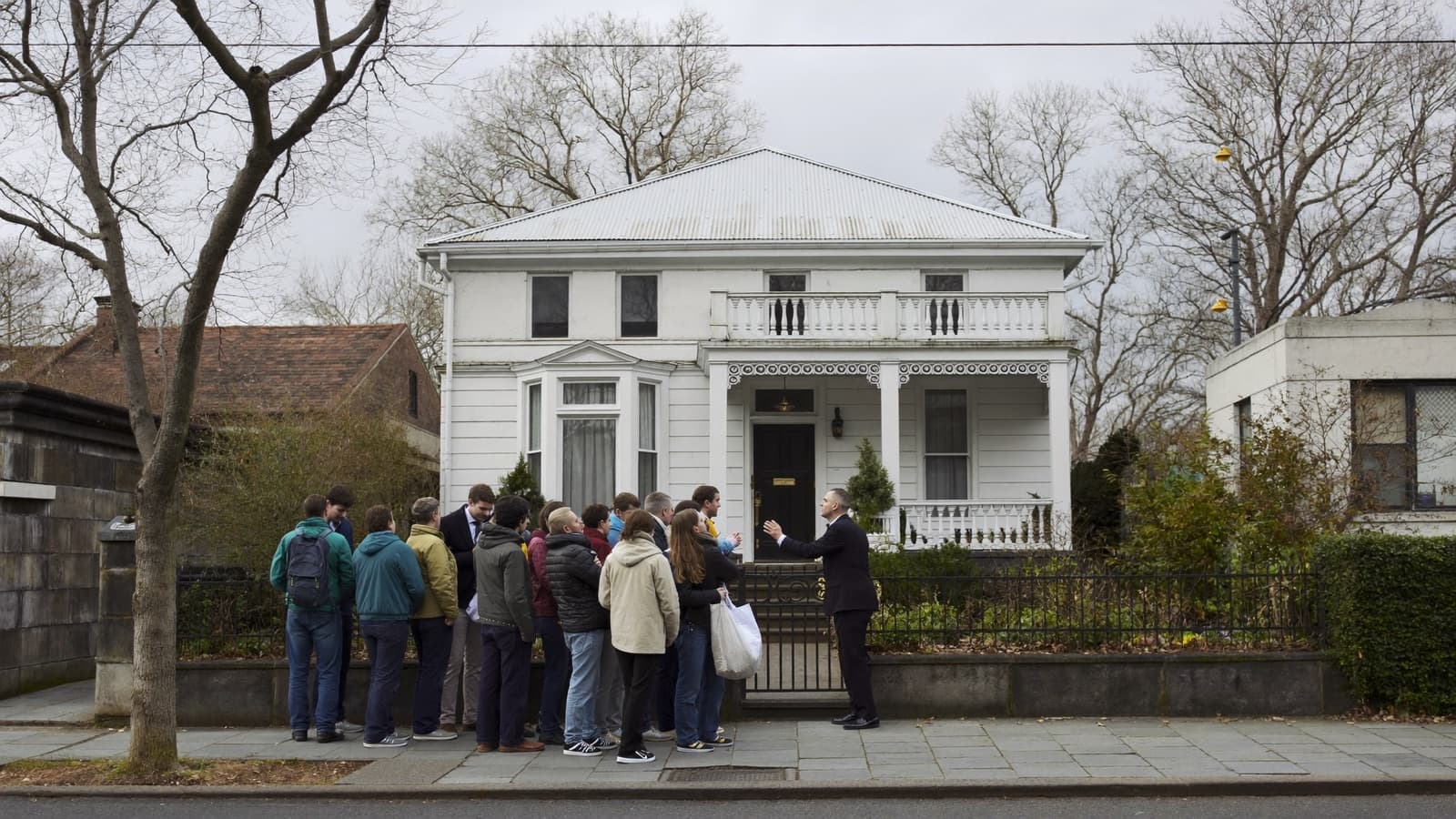
Cover photo: Chris Olszewski, CC BY-SA 4.0, via Wikimedia Commons.
Take the full guide with you.
The complete guide to selling property in Australia: what it really costs, how agents price your home, the 10 questions that catch bad agents out, and a 12-week plan to settlement. Free PDF, personalised to your suburb, in your inbox in 60 seconds.
Read next