
In this article5 sections
Sydney still rewards sellers with well-presented, fairly priced listings, while inflated price guides tend to drag sales out. For buyers, the pace means having pre-approval and a conveyancer ready before the right property surfaces.
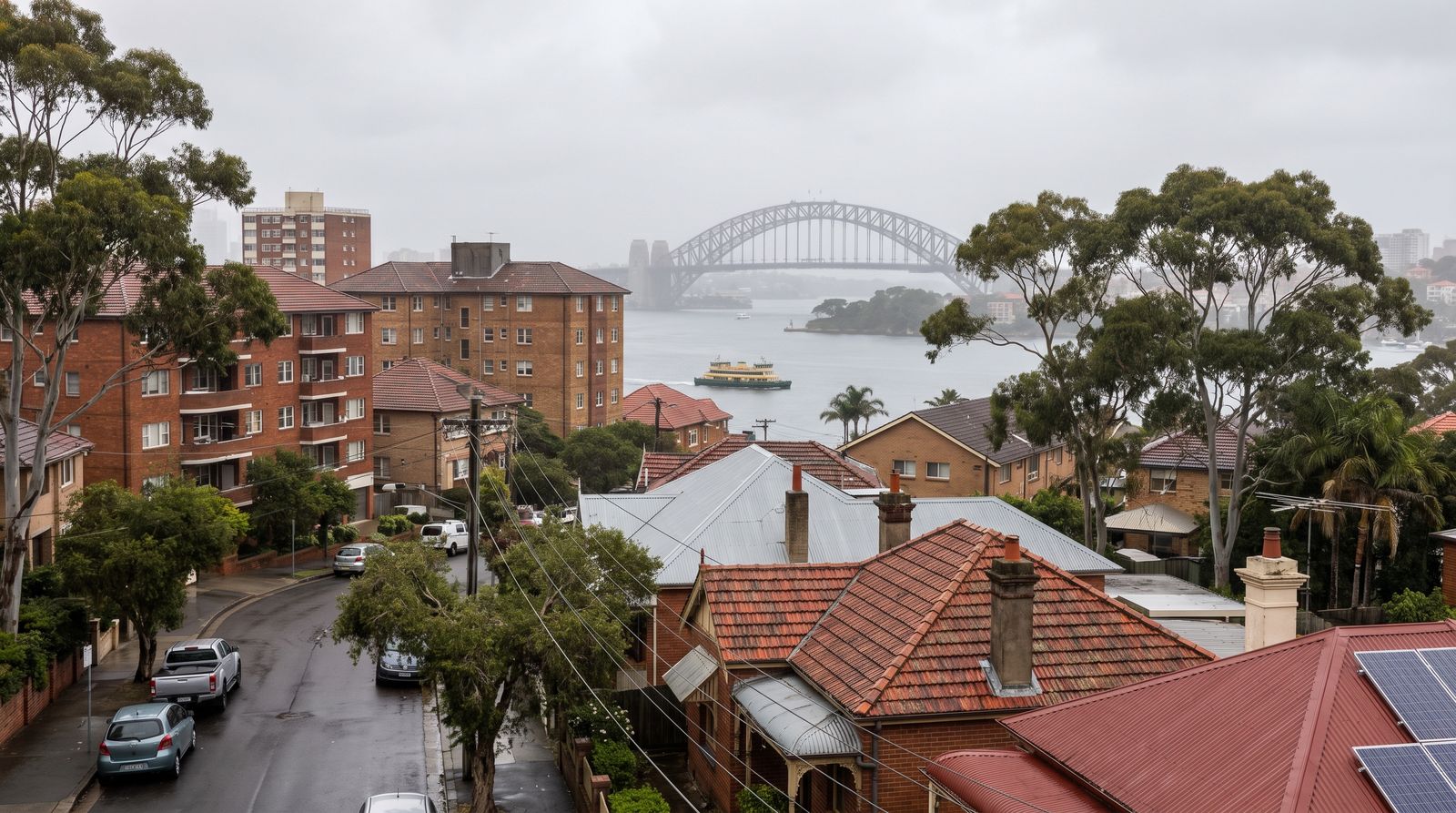
Sydney remains Australia's most expensive property market in 2026, and the dynamics shaping prices this year are markedly different from the post-COVID rebound that defined 2021 and 2022. Population growth, constrained supply, and a sharp drop in rental vacancy are the structural forces in play. Interest rates have stabilised but borrowing capacity hasn't fully recovered, which keeps a lid on the top end of the market while the middle and lower segments continue to firm. Here's where Sydney sits as we move through 2026.
Headline numbers
Sydney's median house price sits around $1.65M as of mid-2026, up roughly 4.1% year-on-year, with units a few percentage points behind at around $830K. Days on market average 28 to 35 across most of metro Sydney, with the inner-west and northern beaches at the tighter end (under 25 days) and outer-fringe estates in southwest Sydney closer to 45 days. Auction clearance rates have averaged in the high-60s through early 2026, which historically signals a balanced-to-firm seller's market.
Where the demand is concentrated
The strongest demand in Sydney through 2026 is in the middle ring, particularly suburbs that combine reasonable median prices with strong public transport and proximity to good schools. Hurstville, Marrickville, Strathfield and Eastwood are seeing extended buyer queues. The lower north shore (Crows Nest, Lane Cove, Naremburn) continues to attract upgraders trading up from the inner-west. The Bays Precinct and Green Square redevelopments are pulling investor attention back to inner-city units after several flat years.
Where the value still sits
Outer southwest Sydney remains the most accessible entry point for first home buyers. Suburbs like Liverpool, Campbelltown, Macquarie Fields and Minto offer median house prices well under $900K with strong infrastructure spending, including Western Sydney Airport, M12 motorway, and the South West Rail Link extension. The Central Coast, technically outside Sydney metro but well within the commute corridor, continues to offer Sydney-adjacent lifestyle at meaningful price discounts to comparable beachside metro suburbs.
The rental side
Sydney's rental market remains exceptionally tight. The metro vacancy rate sits at 1.3% as of Q1 2026, with weekly rents up around 6 to 8% on the year. The squeeze has pushed many tenants further out from the CBD, supporting price growth in middle and outer suburbs. Investor activity is rising on the back of yields recovering to the 3.5% to 4% gross range in suburbs like Liverpool, Bankstown and the Inner West fringe.
What to expect through the rest of 2026
- Listing volumes will likely lift through spring as price expectations stabilise, particularly in the upgrader market
- Western Sydney's infrastructure pipeline (airport, motorways, rail) will continue to support outer-fringe price growth
- Inner-city units remain under-priced relative to houses on a long-run basis; watch for investor re-entry
- Days on market may compress further in tightly-held middle ring suburbs as supply remains constrained
- First home buyer competition for the $800K to $1.1M segment will be intense, particularly with the 5% Deposit Scheme cap at $1,500,000 in Greater Sydney and no income test since 1 October 2025
The Sydney market in 2026 rewards patience and preparation. Buyers serious about competing should have pre-approval secured, conveyancer engaged, and be willing to act when the right property surfaces. Sellers benefit from a market still tilted in their favour for well-presented, fairly-priced listings, but conditioning buyers above market with inflated price guides is increasingly likely to extend campaigns rather than capture the upside.
Keep reading
- Sydney vs MelbourneSide-by-side strategy comparison.
- NSW market reportMedian prices, growth, suburb rankings.
- Buyer's agent costSydney's tight market often warrants one.
- House price forecasts for 2026 and 2027 by capital city: what CBA, Westpac, NAB, ANZ and Domain expect, and what has happened so farEvery major forecaster cut its 2026 house price outlook between March and August 2026. The current numbers for Sydney, Melbourne, Brisbane, Perth, Adelaide, Hobart, Canberra and Darwin, each dated and sourced, set against what Cotality's index actually recorded to August, and how to read them if you are deciding whether to sell.
- Late-July wrap: Wednesday's inflation number, the August rate call, and the first buyer's-market spring in yearsThe June-quarter inflation figures land on 29 July and the RBA decides on 11 August — the two dates that will set the tone for spring. With clearance rates around 50%, more stock on market and every major bank trimming its forecasts, spring 2026 is shaping up as a season that rewards preparation over momentum.
- The cheapest suburbs in every Australian capital city, ranked (Winter 2026 report)Across Australia's eight greater capitals, just eight verified suburbs still carry a median house price under $500,000 — and in Sydney, Adelaide and Canberra the entry price has moved past $700,000. We ranked the cheapest verified suburb in every capital, plus the regional towns where a house still costs less than $250,000.