
In this article6 sections
Brisbane’s growth is moderating but still positive, and most well-presented homes are under offer within four weeks. For buyers, that pace means having finance, suburbs and a price ceiling settled before the right home is listed.
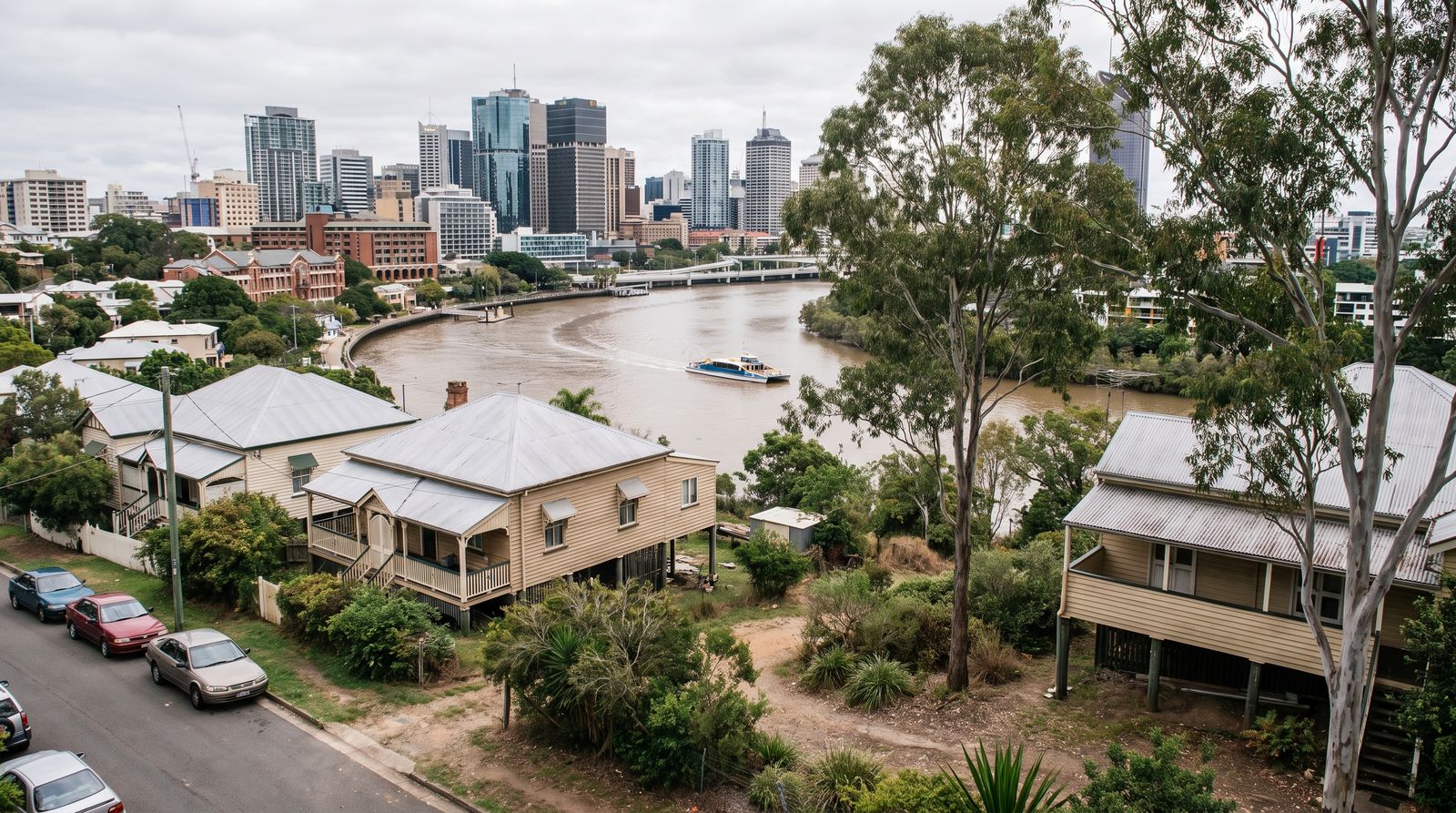
Brisbane has been the standout capital city market in Australia from 2021 through 2025, and 2026 sees that pace moderate without reversing. The combination of population inflows from interstate, infrastructure investment ahead of the 2032 Olympics, and historically lower price points relative to Sydney and Melbourne continues to support the market. The pace is slower than the boom years, but the trajectory is still upward.
Headline numbers
Greater Brisbane's median house price has reached around $980K in mid-2026, up roughly 5.4% year-on-year, with units at around $580K. Days on market sit around 24 to 32, lower than Melbourne and competitive with Sydney's middle ring. Auction clearance rates aren't as widely reported in Brisbane as in southern capitals, but private treaty performance remains strong with most well-presented properties under offer within 4 weeks.
Where Brisbane is still running
Inner-Brisbane suburbs (5 to 10km from CBD) continue to lead growth. Bulimba, Hawthorne, Norman Park, Coorparoo and Camp Hill have all seen 7 to 9% annual growth. Houses on character lots with renovation potential are particularly tightly held. The middle ring (10 to 20km) continues to firm, with suburbs like Carindale, Mount Gravatt, Wynnum and Holland Park West attracting both upgraders and investors.
Where the value plays sit
Outer Brisbane and the Moreton Bay corridor still offer genuine entry points for first home buyers. Caboolture, Morayfield, Logan, Ipswich and Redbank continue to provide $600K to $750K options with infrastructure spending and population inflow supporting medium-term capital growth. The Sunshine Coast hinterland (Beerwah, Glasshouse Mountains, Maleny) and Gold Coast hinterland (Ormeau, Pimpama) offer lifestyle-led options with house medians under $850K.
The rental story
Brisbane's rental market remains the tightest of Australia's capital cities. Vacancy sits at 0.8% as of Q1 2026, with weekly rents up 7 to 10% on the year. The pressure has pushed yields back up despite price growth; gross yields of 4.0 to 4.8% are achievable in middle and outer suburbs. For investors, Brisbane continues to offer the best combination of yield, growth and infrastructure tailwind of any Australian capital.
The Olympics factor
The 2032 Olympics is now close enough that infrastructure spending is concrete and visible. Cross River Rail is due to carry its first passengers in 2029, its new stations are set to reshape commute patterns, and venue construction is underway. Suburbs benefiting most include Bowen Hills (Athletes Village area), Woolloongabba, Kelvin Grove and Kangaroo Point. Investors looking at a 6 to 8 year horizon are increasingly active in these locations.
What to expect through 2026
- Continued price growth, more moderate than 2021–24, but still outpacing the national average
- Interstate migration from NSW and VIC is expected to continue at elevated rates
- Rental tightness will continue to support investor returns; new stock pipeline remains constrained
- Olympic-adjacent suburbs may see further re-rating as 2032 approaches
- Outer corridors remain accessible for first home buyers, but window is closing
Brisbane in 2026 isn't the runaway growth story of 2022, but it remains the most balanced market in Australia for buyers and investors. The combination of relative affordability, strong rental yields, infrastructure investment, and population inflow makes it the market hardest to argue against on fundamentals.
Keep reading
- Best Brisbane family suburbsInner / middle / outer ring picks.
- QLD market reportMedian prices, growth, suburb rankings.
- House vs apartment investmentBrisbane has been the standout for both.
- House price forecasts for 2026 and 2027 by capital city: what CBA, Westpac, NAB, ANZ and Domain expect, and what has happened so farEvery major forecaster cut its 2026 house price outlook between March and August 2026. The current numbers for Sydney, Melbourne, Brisbane, Perth, Adelaide, Hobart, Canberra and Darwin, each dated and sourced, set against what Cotality's index actually recorded to August, and how to read them if you are deciding whether to sell.
- Late-July wrap: Wednesday's inflation number, the August rate call, and the first buyer's-market spring in yearsThe June-quarter inflation figures land on 29 July and the RBA decides on 11 August — the two dates that will set the tone for spring. With clearance rates around 50%, more stock on market and every major bank trimming its forecasts, spring 2026 is shaping up as a season that rewards preparation over momentum.
- The cheapest suburbs in every Australian capital city, ranked (Winter 2026 report)Across Australia's eight greater capitals, just eight verified suburbs still carry a median house price under $500,000 — and in Sydney, Adelaide and Canberra the entry price has moved past $700,000. We ranked the cheapest verified suburb in every capital, plus the regional towns where a house still costs less than $250,000.