Building approvals fall again, deepening Australia's housing supply squeeze
Total dwelling approvals fell 3.4% to 16,710 in April 2026, deepening a supply shortfall that is leaving Australia well short of its 1.2 million home target.

19 June 2026 6 min read
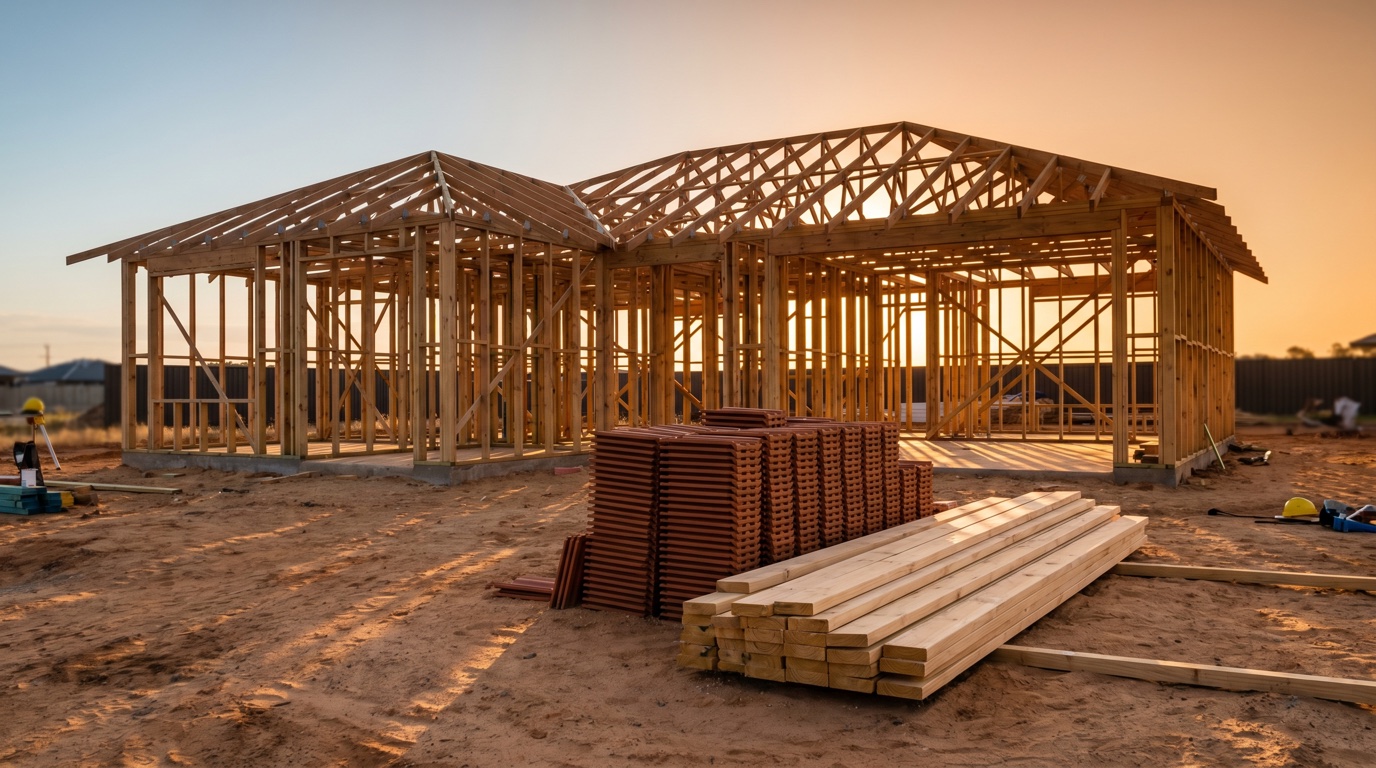
Australia's pipeline of new homes has narrowed again. Fresh figures from the Australian Bureau of Statistics show the total number of dwellings approved for construction fell 3.4% to 16,710 in April 2026, a result that adds to a long-running concern: the country is approving, and building, far fewer homes than it needs.
For anyone planning to buy, build or rent in the next few years, this is more than a statistical blip. Building approvals are an early signal of how much new housing is coming. When that number keeps slipping, it points to continued pressure on prices and rents, longer waits for new builds, and tighter choice for buyers. Here is what the latest release shows, why it is happening, and what it means in practical terms.
What the April figures show
The headline fall was broad. Approvals for private sector houses eased 1.0% to 10,088, while private dwellings excluding houses, which covers apartments and townhouses, dropped 3.6% to 6,403. That higher-density category has been the more volatile of the two, and it remains well below the levels Australia would need to lift overall supply.
The state picture was mixed rather than uniformly weak. Approvals fell in some of the largest markets, including New South Wales, down 9.5%, Western Australia, down 7.4%, and Victoria, down 3.9%. They rose elsewhere, led by Tasmania, up 42.2%, with South Australia up 4.3% and Queensland up 0.3%. Smaller states can swing sharply from month to month because a single large project can move the numbers, so a big percentage rise in one state does not undo a fall in a much larger one.
Why approvals matter for the supply crunch
Approvals sit near the start of the home-building journey. A council ticks off a project, then it has to be financed, built and finished before anyone can live in it. The trouble is that approvals are not flowing through to completed homes at the pace Australia needs.
The National Housing Supply and Affordability Council estimates the country is tracking well short of the 1.2 million home target set under the Housing Accord. Only around 263,000 dwellings were completed in the first 18 months, roughly 232,000 on a net basis once demolitions and replacements are taken into account. In other words, even the homes that do get approved are taking time to become real, liveable dwellings.
That gap between approvals and completions is the heart of the supply crunch. Fewer approvals today means fewer homes finished in a year or two, at a time when the existing shortfall is already large.
What is holding building back
The pressures on home building are practical and persistent. High construction costs and labour shortages continue to push up the price of getting a project off the ground, and these costs bite hardest on higher-density work such as apartment blocks, where margins are tighter and timelines longer.
When it costs more to build and skilled trades are hard to find, some projects are delayed, scaled back or shelved before a brick is laid. That helps explain why the apartments and townhouses category keeps lagging, and why approvals can fall even when demand for housing is strong.
If you are weighing up building rather than buying an established home, it is worth understanding how these cost pressures flow through to a build budget. Our house-and-land guide walks through how these packages work, and our overview of renovation costs in 2026 gives a sense of how labour and materials are tracking, which is useful context whether you are renovating or building from scratch.
What it means for you
None of this changes overnight, and the data is best read as a trend rather than a forecast. Still, a few practical points follow from a softer approvals pipeline.
- Expect continued pressure on prices and rents. When fewer homes are being added, the existing shortage tends to keep upward pressure on both. If you are a first home buyer, building this into your timeline and budget can help you avoid surprises.
- Allow more time if you are building. Approvals are not translating into completions quickly, so realistic timelines matter. Choosing the right builder is a big part of staying on track, and our guide on how to find a builder in Australia covers what to check before you sign.
- Keep your options open. With higher-density approvals soft, the mix of what is available can be uneven from suburb to suburb. Comparing established homes against house-and-land can widen your choices, and our guide to buying property in Australia sets out the steps either way.
- Look local, not just national. The state-by-state spread shows conditions vary widely. Researching supply and demand in the areas you are considering, including through our suburb pages, gives a clearer picture than the national headline alone.
The supply story is a slow one, and these monthly figures are a single data point in a much longer trend. But the direction is clear enough to plan around. Whether you are buying, building or renting, building in extra time, comparing your options carefully and doing the local homework remain the most useful responses to a market where new homes are still in short supply.
Take the full guide with you.
The complete guide to selling property in Australia: what it really costs, how agents price your home, the 10 questions that catch bad agents out, and a 12-week plan to settlement. Free PDF, personalised to your suburb, in your inbox in 60 seconds.
Read next