Seven Hills, QLD 4170
Brisbane City CouncilGreater BrisbaneAll suburbs in postcode 4170
Updated
Median house price
Verified median pending
We don't yet have a verified suburb-level median for this market. We're working on a data partner; in the meantime, treat the state-level figures as a guide only. How we source data.
Selling in Seven Hills?
Get the free selling guide, personalised to Seven Hills, or ask for a free appraisal from a local agent.
Rent in Seven Hills
Free appraisal in Seven Hills
What’s your home worth in Seven Hills?
Ask us to introduce one participating agent who sells in your area for an appraisal backed by recent comparable sales. Only with your permission, and no commitment to list.
What to know about Seven Hills
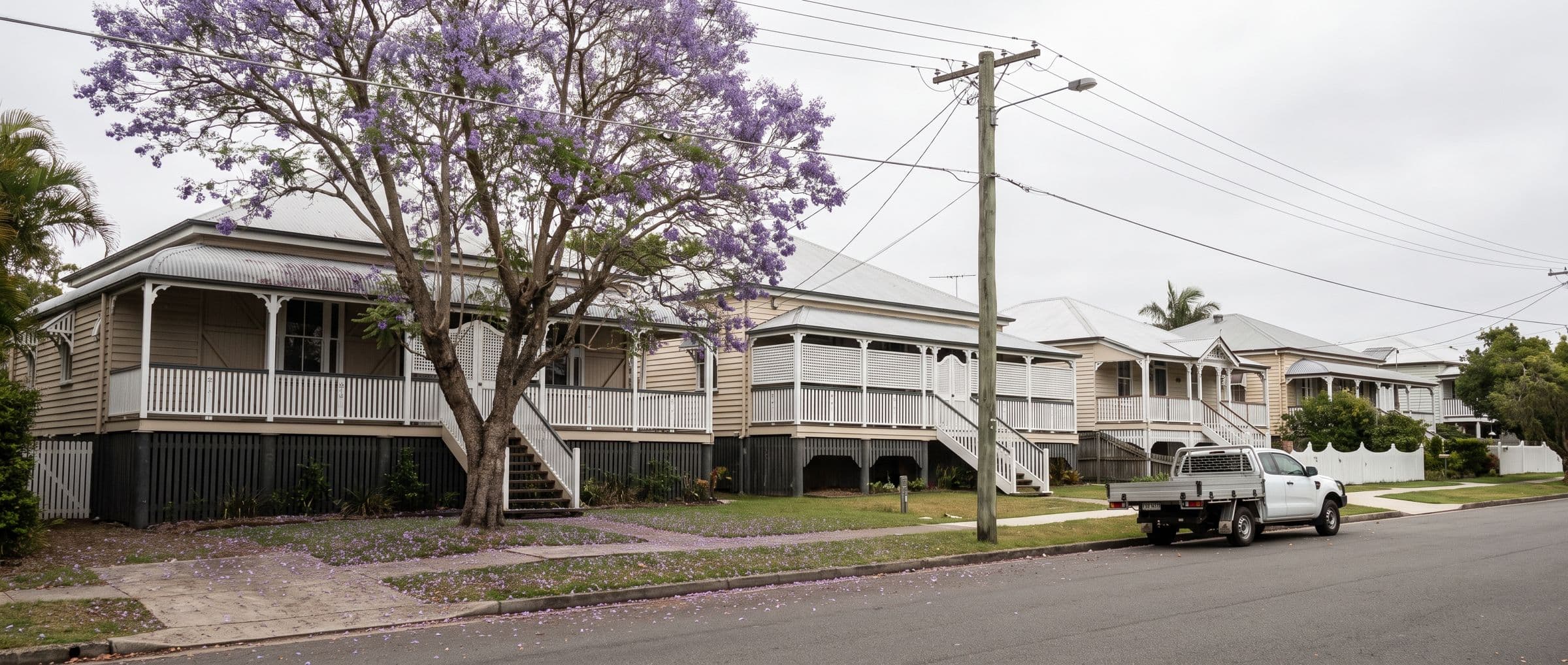
Seven Hills (4170) sits in the Brisbane region of Queensland.
Daily life is car-dependent: most residents drive to work, school and the shops.
What it’s like to live here
Seven Hills scores 22/100 on walkability, which makes it car-dependent with limited public transport. Plan for two cars in a typical household, especially if work isn't local.
Summer days here average around 30°C (warm), winter mornings around 9°C (mild). Annual rainfall lands at about 967 mm. Figures are our 1991 to 2020 averages of SILO data for this location (Queensland Government, built from Bureau of Meteorology observations).
Schooling within or near the suburb covers 7 government primary, 3 government secondary, 6 Catholic, 2 independent.
Schools in Seven Hills
Location
Walkability
- Walk
- 22/100
- Transit
- 0/100
- Bike
- 100/100
Very car dependent. Scores out of 100, calculated from OpenStreetMap data (ODbL).
Walkability data as of May 2026· OpenStreetMap
Demographics
Crime and safety
273,294 offences recorded in 2026 across the Brisbane City Council LGA
QLD Police publishes these figures only for the whole Brisbane City Council, which may include suburbs with very different crime profiles. Quieter residential pockets likely have lower rates than the total suggests; busier areas may have higher.
Top offence categories
Source: State Police Open Data
Weather year-round
- Annual rainfall
- 967 mm
- Hottest month, avg max
- 30.2°C
- Coldest month, avg min
- 9.1°C
Rainfall by month
Our 1991 to 2020 averages of SILO data (Queensland Government, built from Bureau of Meteorology observations, CC BY 4.0) for this location.
Climate data as of October 2026· SILO (Queensland Government), from Bureau of Meteorology observations
Questions about Seven Hills
- What is the Seven Hills postcode?
- Seven Hills is in the 4170 postcode, in QLD, in the Brisbane City Council region.
- Where is Seven Hills?
- Seven Hills is a suburb of Brisbane, in QLD 4170. It is part of the Greater Brisbane area, in the Brisbane City Council region.
- What schools are in Seven Hills?
- There are 20 schools serving Seven Hills on this page, including Seven Hills State School, St Thomas' School, Norman Park State School.
- How walkable is Seven Hills?
- Seven Hills has a Walk Score of 22 out of 100, highly car-dependent. transit score 0, bike score 100.
- What suburbs are near Seven Hills?
- Seven Hills is close to Norman Park, Carina North, Morningside, Hawthorne, Cannon Hill.
Selling in Seven Hills? Get the free selling guide
What selling costs, how agents price homes, what to ask them and a 12-week plan to settlement, personalised to Seven Hills. A free PDF, in about a minute.
More on Seven Hills and nearby
Seven Hills
Compare side by side
Selling in QLD
Sources. House and unit medians from the NSW Valuer General, Land Victoria, the SA Government and the ABS; rents from the state rental bond authorities. Census from the ABS (2021), climate from the Bureau of Meteorology, hazard from Geoscience Australia, schools from ACARA and crime from state police open data. Each figure carries its source and date. How we source data
How we’re paid. The guides and this page are free. When a seller asks, we introduce one local agent, and the agent pays us a flat fee for the introduction, never a share of their commission; it costs the seller nothing. If a figure looks wrong, tell us and we’ll fix it.